

The McGill Alt Protein Project
McGill University
21111 Rue Lakeshore
Sainte-Anne-de-Bellevue,
Quebec
H9X 3V9
Canada
Founded 2026
About
The McGill Alt Protein Project is a student-led initiative advancing alternative protein education, research, and community building at McGill University. At a time when global protein supply faces increasing pressure from climate, health, and resource constraints, we see alternative proteins not as a niche technology, but as a systems-level transition requiring coordinated engagement across disciplines. Our mission is to turn McGill into a lasting ecosystem for alternative protein talent, open-access research, and cross-disciplinary innovation. We are guided by a simple conviction that meaningful progress in alternative proteins does not happen in silos, and by bringing together students across diverse fields, we approach the transition as a complex systems challenge rather than a standalone food-technology problem.
McGill provides a uniquely strong environment for advancing our mission. Across its diverse programs, including Bioresource Engineering, Food Science, Human Nutrition, Life Sciences, Chemistry, Public Health, Management, and Public Policy, students have access to a wide range of expertise, facilities, and research labs relevant to alternative protein advancement. Our members engage with leading infrastructure at McGill’s Macdonald Campus, such as the Sustainable Agri Food Systems Engineering Lab (SASEL), the High Pressure Processing Pilot Plant, the Functional Food Ingredients and Biocatalysis Laboratory, the Process Engineering for Functional Foods Laboratory, and the Food Safety and Foodomics Laboratory, enabling exposure to both theoretical and applied dimensions of the field. In the downtown campus, robust technical assets sit alongside the Faculties of Law and Management, Public Policy, and the School of Population and Global Health, allowing students to explore how alternative proteins connect to broader societal challenges beyond the science, from regulation and health outcomes to venture creation and market adoption. This cross-campus dynamic shapes our interdisciplinary approach to exploring the field. Furthermore, being situated in Montreal, one of North America’s most active biotech and food-innovation corridors, means our chapter is never far from the industry and policy actors actively deciding how this transition unfolds.
Our founding team has already proven what student-driven momentum looks like. We previously launched the CellAg Sustainability & AI Collective and the Cell Ag Student Group, secured independent funding through New Harvest’s Student Activation Fund, and organised roundtables and lecture series that bridged students with researchers and industry leaders. Our cross-disciplinary team, spanning sustainability engineering, computational modelling, public health (epidemiology), AI and software engineering, food safety, chemistry, and public policy, reflects our belief that no single discipline can advance this field alone. Moving forward, everything we do is organised around three core pillars: Education, Research, and Community. These are designed to cultivate a cross-disciplinary student network that builds real literacy, leads tailored projects to generate open-access data and computational tools, and transforms entrepreneurial ambition into real-world solutions. Guided by our faculty lead, Dr Ebenezer Miezah Kwofie, who integrates alternative protein case studies into course curricula and leads research on sustainable healthy diet transitions, and supported by other engaged faculty, our chapter aims to bridge academic learning with practical exposure. Through connections with centres such as the McGill Dobson Centre for Entrepreneurship and the Mastercard Foundation Scholars Program, our chapter and its members can access mentorship, funding pathways, and networks that support the translation of alternative protein ideas into real-world applications and ventures. Joining the Alt Protein Project gives us the global network and institutional backing to scale what we have already begun building into a lasting engine for alternative protein talent, open-access research, and cross-disciplinary collaboration at McGill and across Montreal’s agri-food innovation ecosystem. We are not trying to build a club; we are positioning McGill as a defining contributor to the future of sustainable food systems, and the foundation is already here.
Learn more about our work
Learn more about the brief on the cultured milk lecture organized by the Cell Ag Sustainability and AI Collective at McGill.
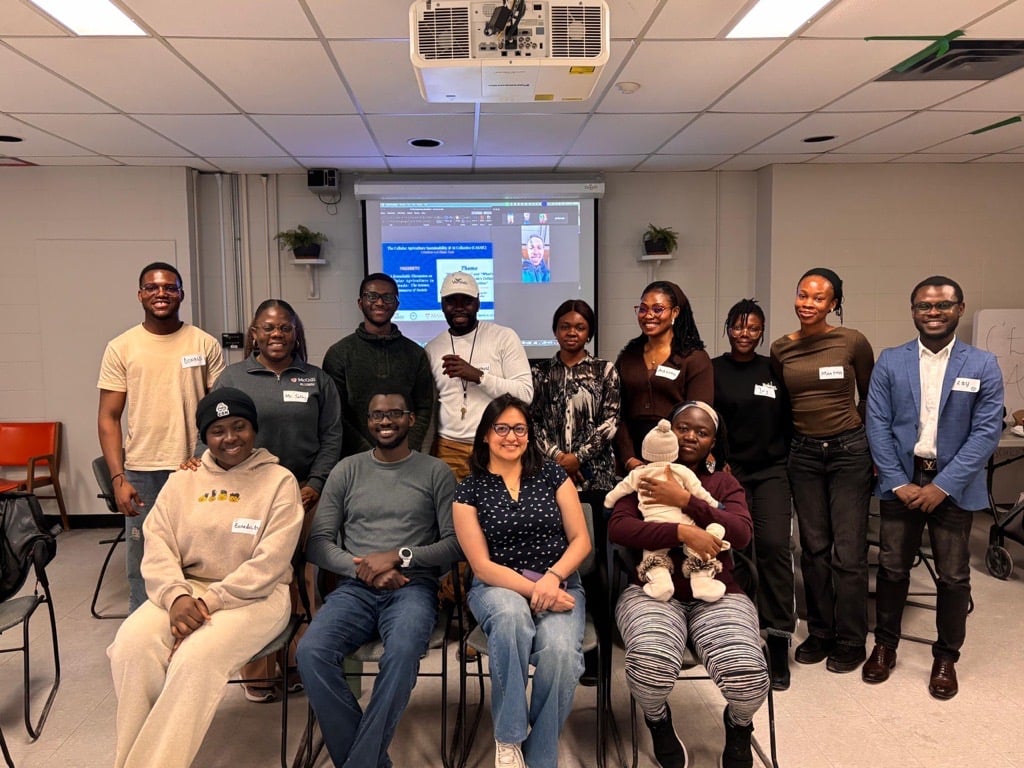
The first roundtable discussion organized by the Cell Ag Sustainability and AI group at McGill.
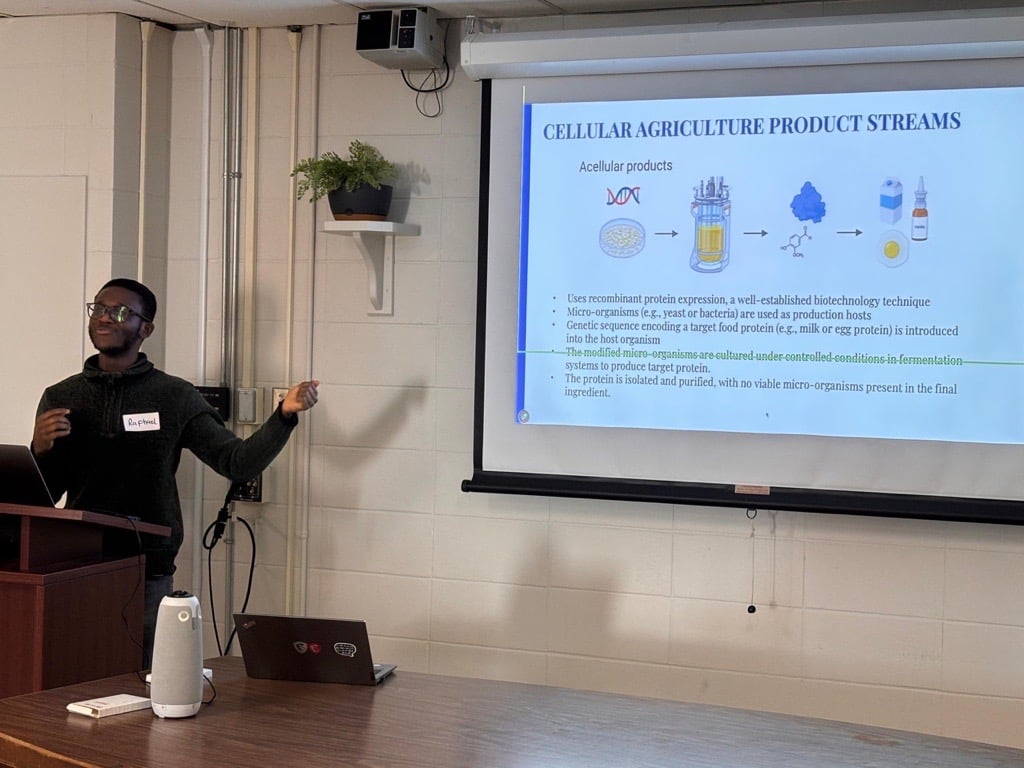
An introductory lecture given by the Lead for the Cell Ag Sustainability and AI Collective at McGill.